

How to Choose a Network for USDT Transfers: TRC20, ERC20, and BEP20 Explained
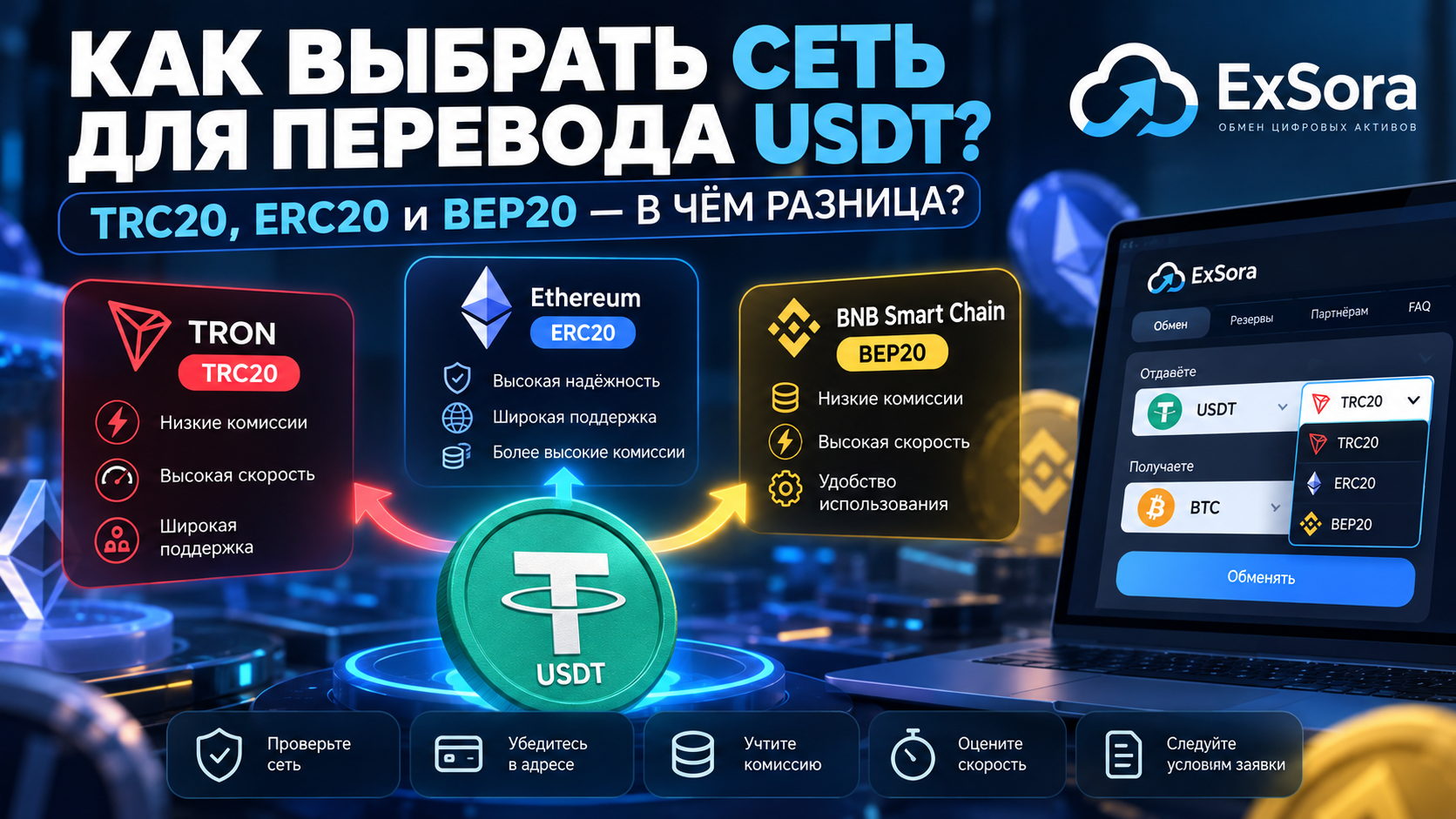
How to Choose a Network for USDT Transfers: TRC20, ERC20, and BEP20 Explained
USDT (Tether) is one of the most widely used stablecoins in the cryptocurrency market. It is commonly used for storing digital assets, transferring funds between users, trading on exchanges, and exchanging cryptocurrency for other digital assets or fiat currencies.
However, USDT operates across multiple blockchain networks. Users may encounter options such as USDT TRC20, USDT ERC20, and USDT BEP20. Although all three represent USDT, they operate on different blockchain networks, which makes choosing the correct network essential when making a transfer.
In this article, we will explain the differences between popular USDT networks, how to choose the appropriate one, and what you should check before sending funds.
Why Is USDT Available on Multiple Networks?
USDT is a token that can be issued and transferred across different blockchains. This means that the same asset can be transferred using different blockchain infrastructures.
For example:
TRC20 — USDT on the TRON network.
ERC20 — USDT on the Ethereum network.
BEP20 — USDT on BNB Smart Chain.
For the average user, the underlying value of the asset does not fundamentally change: 100 USDT remains 100 USDT. What changes is the infrastructure used to process the transfer.
Depending on the selected network, transaction fees, confirmation times, address formats, and compatibility with the recipient’s wallet or service may differ.
That is why checking the asset name alone is not enough — you should always verify the network as well.
USDT TRC20
TRC20 is a token standard used on the TRON blockchain. It has become widely used for USDT transfers and is supported by many cryptocurrency exchanges, wallets, and exchange services.
TRON addresses typically begin with the letter T.
One reason for the popularity of TRC20 is its practicality for everyday transfers. However, the actual withdrawal or transaction fee depends on the wallet, exchange, or other service being used, so it should always be checked before sending funds.
TRC20 can be a convenient option when both the sender and recipient support the TRON network.
USDT ERC20
ERC20 is a token standard used on the Ethereum network.
Ethereum is one of the most established and widely used blockchain networks, and ERC20 USDT is supported by a large number of cryptocurrency services and wallets.
Ethereum addresses typically begin with 0x.
Transactions on Ethereum require a network fee. The cost can vary depending on current network activity and other factors.
For this reason, users should check the current transaction cost before transferring USDT via ERC20.
USDT BEP20
BEP20 is used on BNB Smart Chain (BSC).
Like Ethereum addresses, BNB Smart Chain addresses typically begin with 0x. This creates an important point to remember: addresses on different EVM-compatible networks may look identical.
However, this does not mean that the networks are interchangeable.
If a service provides an address specifically for USDT BEP20, the funds should be sent using the network specified by that service. A matching address format alone does not mean that another network can safely be used.
TRC20, ERC20, or BEP20 — Which One Should You Choose?
There is no single network that is the best option in every situation.
When choosing a network, several factors should be considered: whether the recipient supports the network, the transaction fee charged by the sending service, how quickly the transfer needs to be completed, and whether the required network is available to both the sender and recipient.
For example, if an exchange service provides a deposit address for USDT TRC20, you should also select TRON (TRC20) when withdrawing the funds from your exchange or wallet.
If the provided address is for USDT ERC20, select Ethereum (ERC20).
If you are using USDT BEP20, select BNB Smart Chain (BEP20).
The main rule is simple:
The sending network must match the network specified by the recipient.
Why Does a Matching Address Not Guarantee Compatibility?
Particular care should be taken with networks that use addresses beginning with 0x.
This address format is used not only by Ethereum but also by several other EVM-compatible networks. As a result, a user may see an identical or similar-looking address and incorrectly assume that any available network can be selected.
You should never rely solely on the appearance of an address.
Always verify all three parameters:
Asset → Network → Recipient Address
All three must correspond to the requirements of the transaction.
What Happens If You Choose the Wrong Network?
The outcome depends on the specific circumstances.
In some cases, recovering the funds may be technically possible, but it could require assistance from the owner of the receiving address or the service’s support team. In other situations, recovery may be difficult or impossible.
For this reason, you should never assume that an incorrect transfer can simply be reversed.
It is better to spend a few extra seconds checking the network before sending the funds.
When transferring a large amount, you may also consider making a small test transaction first, provided that the fees and conditions of the services involved make this practical.
How to Check the Network Before Sending USDT
Before confirming a transaction, we recommend checking the following:
1. Check the asset you are sending.
Make sure you have selected USDT.
2. Check the network specified by the recipient.
For example, TRC20, ERC20, or BEP20.
3. Check the network selected for the withdrawal.
It must match the recipient’s network.
4. Verify the address.
Check the full address or, at minimum, several characters at the beginning and end after pasting it.
5. Check the fee and final amount.
Your exchange or wallet should display this information before you confirm the transaction.
Only confirm the transfer after all of these parameters have been checked.
Do Not Choose a Network Based Only on the Fee
A lower transaction fee can certainly be an advantage, but it should not be the only factor when selecting a network.
Imagine that your wallet offers several networks for withdrawing USDT and one option is significantly cheaper. If the recipient does not support that network, the lower fee becomes irrelevant.
Therefore, network compatibility should always be checked first, followed by transaction fees and other conditions.
How Does This Work When Exchanging Through ExSora?
When creating a digital asset exchange order through ExSora, the user selects the required exchange direction and an available network.
If multiple networks are available for the selected asset, it is important to use the exact network specified in the particular exchange order.
After creating an order, carefully review its parameters before sending any funds. You should not independently switch to another network simply because it is available in your wallet or on your cryptocurrency exchange.
If you are unsure about the selected network or any of the order conditions, it is better to contact support and clarify the details before sending your funds.
Security Starts Before You Send Your Funds
Most blockchain transactions cannot simply be cancelled after confirmation in the same way that an unfinished traditional bank transfer might be.
For this reason, one of the most important parts of making a secure transaction happens before you click “Send.”
Check:
Asset → Network → Address → Amount → Fee → Order Conditions
Following this simple sequence can significantly reduce the risk of making a mistake.
Conclusion
TRC20, ERC20, and BEP20 allow users to transfer USDT through different blockchain networks. Each network has its own infrastructure and transaction conditions.
When selecting a network, you should not focus solely on popularity or transaction fees. The first priority is to make sure that the same network is supported on both sides of the transaction.
The most important rule can be summarized in one sentence:
If the recipient specifies a particular network for USDT, send the funds using that exact network.
Always carefully check the transaction details before sending your funds, and if you are uncertain about anything, clarify the information before completing the transfer.
ExSora — digital asset exchange with a focus on convenience, speed, support, and security.
Official website: https://exsora.cc