

7 Common Mistakes When Exchanging Cryptocurrency and How to Avoid Them
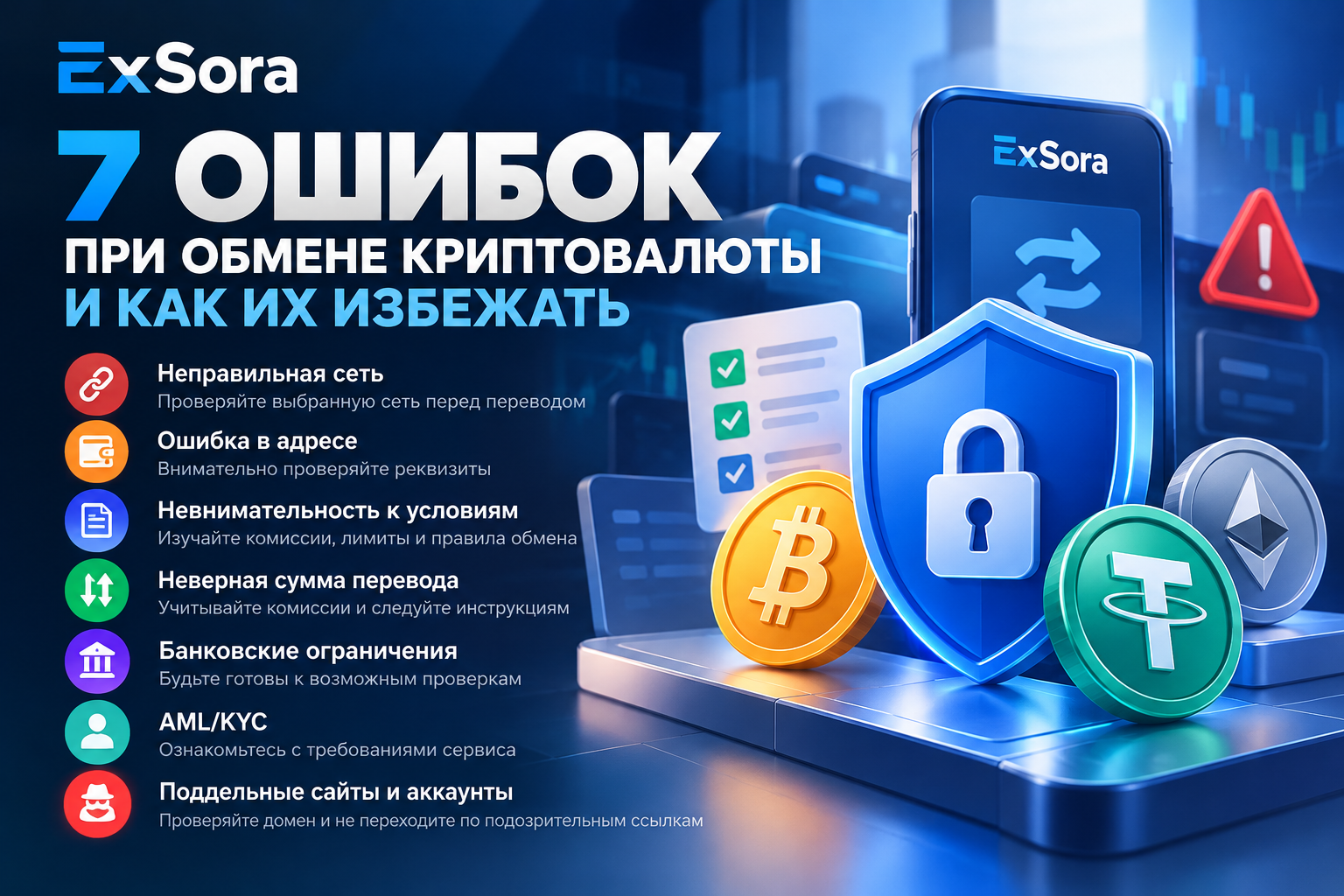
7 Common Mistakes When Exchanging Cryptocurrency and How to Avoid Them
Cryptocurrency exchange has become a common financial activity. However, even a small mistake can lead to delays, additional costs, or the loss of funds.
Let's explore seven common mistakes and how to avoid them.
1. Choosing the Wrong Blockchain Network
USDT operates on different blockchain networks, including TRC20, ERC20, and BEP20. When transferring funds, it is important to ensure that the selected network is supported by the recipient.
How to avoid it: Before sending cryptocurrency, double-check both the wallet address and the selected blockchain network.
2. Entering an Incorrect Wallet Address
Sending cryptocurrency to an incorrect address may result in permanent loss of funds. Blockchain transactions generally cannot be reversed once confirmed.
How to avoid it: Carefully verify the entire wallet address, or at least its beginning and ending characters. Copy and paste addresses instead of entering them manually.
3. Ignoring Exchange Terms and Conditions
Some users focus only on the exchange rate without checking minimum transaction amounts, fees, rate fixation policies, and other important conditions.
How to avoid it: Read the exchange service's terms and conditions before creating an exchange request.
4. Sending the Wrong Amount
If the amount sent differs from the amount specified in the exchange request, additional verification or recalculation may be required.
How to avoid it: Account for wallet transaction fees and carefully follow the exchange service's payment instructions.
5. Underestimating Banking Restrictions
When exchanging cryptocurrency for fiat currency, banks and payment providers may conduct additional checks, potentially affecting processing times.
How to avoid it: Use payment details that belong to you and consider possible banking processing delays.
6. Ignoring AML/KYC Requirements
Cryptocurrency exchange services may verify the origin of digital assets and request additional information in accordance with their policies and applicable requirements.
How to avoid it: Review the service's AML/KYC policy before exchanging funds and avoid using assets of questionable origin.
7. Trusting Fake Websites and Accounts
Scammers may create fraudulent exchange websites, fake Telegram accounts, and impersonated customer support pages.
How to avoid it: Always verify the website's domain name, avoid suspicious links, and never share passwords, recovery phrases, or verification codes with anyone.
Conclusion
Safe cryptocurrency exchange starts with attention to detail. Checking the blockchain network, wallet address, exchange terms, and website authenticity takes only a few minutes but can help prevent serious problems.
ExSora recommends carefully verifying all transaction details and reviewing exchange conditions before proceeding.
Official website: https://exsora.cc