

What Are Memo and Destination Tag in Cryptocurrency Transfers, and Why Are They Important?
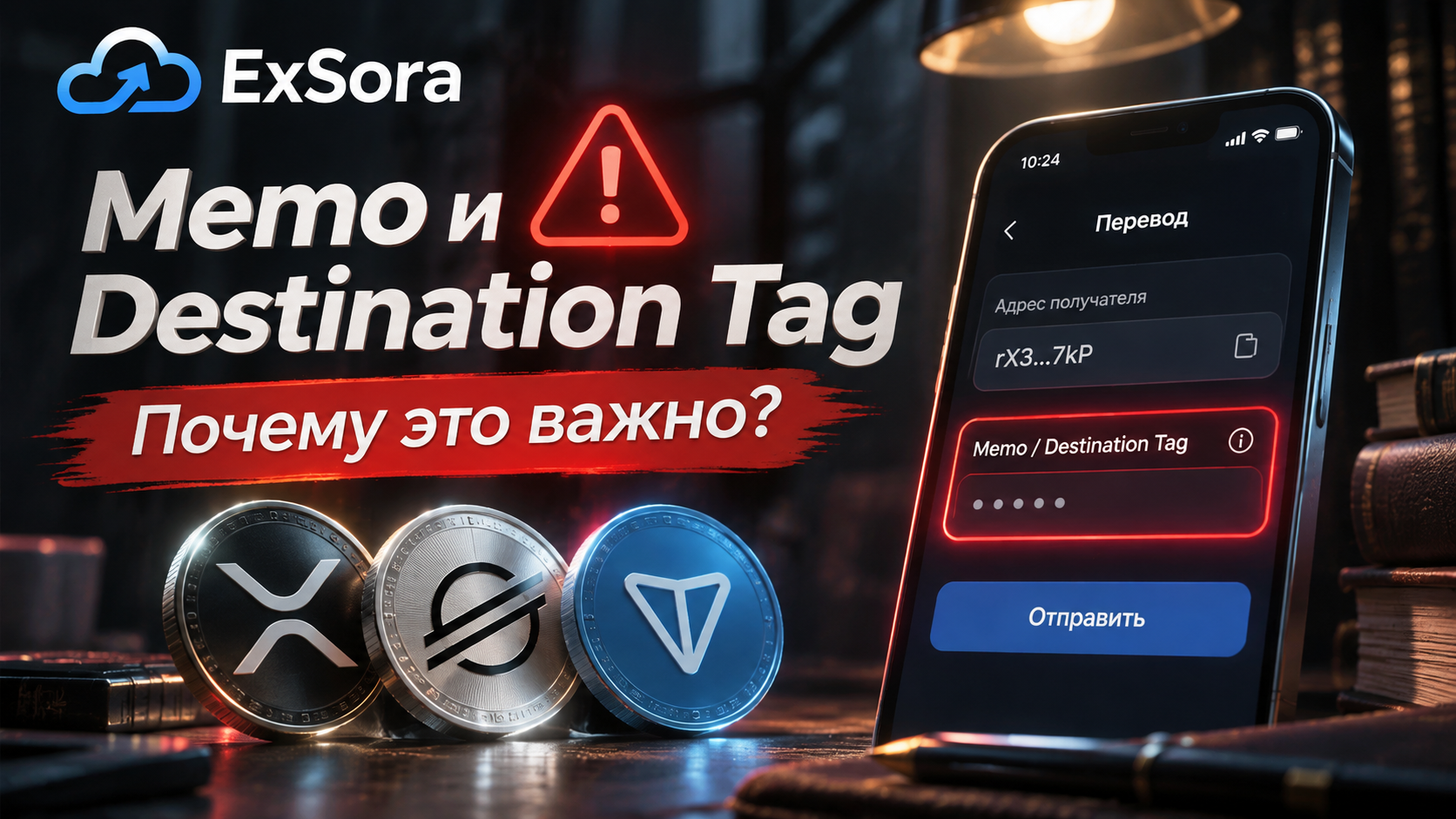
What Are Memo and Destination Tag in Cryptocurrency Transfers, and Why Are They Important?
When transferring cryptocurrency, users typically check the wallet address, selected network, and transaction amount. However, for certain cryptocurrencies and payment services, this information alone may not be sufficient. An additional identifier, such as a Memo, Destination Tag, or transaction comment, may also be required.
Failing to include this identifier can sometimes result in delayed deposits, additional verification procedures, or the need to contact customer support.
Let's explore what these identifiers are, when they are required, and how to avoid common mistakes when transferring cryptocurrency.
What Are Memo and Destination Tag?
Memo and Destination Tag are additional pieces of information that can accompany cryptocurrency transactions.
They help the receiving service identify which user or transaction an incoming payment belongs to.
For example, a cryptocurrency exchange may use a single deposit address for multiple customers. In such cases, an additional identifier allows the platform to associate a specific transfer with the correct user account.
It is important to understand that a wallet address and a Memo or Destination Tag are not the same thing. If the recipient requires an additional identifier, both the address and the identifier must be entered correctly.
Which Cryptocurrencies Use These Identifiers?
XRP — Destination Tag
The XRP Ledger supports an additional numerical identifier known as a Destination Tag.
When transferring XRP to certain exchanges or cryptocurrency services, this identifier helps the receiving platform determine which customer should be credited.
If XRP is sent to a shared deposit address without a required Destination Tag, the transaction may be successfully processed on the blockchain, but the receiving platform may be unable to automatically identify the intended account.
XLM — Memo
The Stellar network supports a similar feature called Memo.
Some cryptocurrency exchanges provide users with a shared deposit address and an individual Memo. In these cases, both details must be entered correctly when transferring XLM.
TON — Transaction Comment
When transferring assets on the TON network, certain services may also require a transaction comment or Memo.
However, some platforms provide unique deposit addresses and do not require any additional identifier.
Therefore, it is important to follow the specific recipient's instructions rather than relying solely on the cryptocurrency being transferred.
Is a Memo Always Required?
No. An additional identifier is not necessary for every cryptocurrency transfer.
For example, when sending XRP to your own non-custodial wallet, a Destination Tag is generally not required.
The situation is different when depositing funds to an exchange or another platform that uses a shared address for multiple customers.
The main rule is simple: if the receiving platform requires a Memo, Destination Tag, or transaction comment, you must enter it exactly as provided.
Never enter random values or reuse an identifier from another transaction.
What Happens If You Forget a Memo or Destination Tag?
Several outcomes are possible:
The transaction may be completed on the blockchain but not automatically credited to the recipient's account.
The receiving platform may request additional transaction details for manual verification.
The deposit may be delayed while the circumstances are investigated.
In some cases, recovering the funds may not be possible.
Certain networks and services have mechanisms that can reject transfers without a required identifier. Therefore, the consequences depend on the blockchain and the receiving platform's configuration.
A confirmed blockchain transaction does not necessarily mean that the funds have been credited to the intended user account.
What Should You Do If You Sent Funds Without the Required Identifier?
First, do not immediately repeat the transfer in an attempt to correct the mistake.
Instead, follow these steps:
Check the transaction status using an appropriate blockchain explorer.
Save the transaction identifier (TXID or transaction hash).
Verify the recipient's address and the details used for the transfer.
Contact the receiving platform's official customer support.
Follow the support team's instructions for verifying ownership of the transaction.
Manual crediting or recovery of funds is not guaranteed. The receiving platform determines whether recovery is possible and what conditions may apply.
Never share your recovery seed phrase, private keys, or wallet passwords with anyone claiming to provide customer support.
How Can You Avoid These Mistakes?
Before sending cryptocurrency, we recommend checking the following:
Make sure the recipient supports the selected cryptocurrency and blockchain network.
Verify the recipient's wallet address.
Check whether a Memo, Destination Tag, or transaction comment is required.
Copy the additional identifier directly from the recipient's current deposit instructions.
Review the transaction amount and network fee before confirming the transfer.
For larger transfers, consider sending a small test transaction if permitted by the receiving platform.
When exchanging cryptocurrency, it is also important to review the terms of the selected exchange direction, including deposit requirements and exchange rate conditions.
Conclusion
Memo and Destination Tag are small but sometimes essential components of cryptocurrency transactions.
Even when the wallet address is correct, omitting a required additional identifier may prevent the receiving platform from automatically crediting the funds.
For this reason, users should carefully verify all payment details provided by the recipient before initiating a cryptocurrency transfer.
ExSora recommends reviewing the terms of the selected exchange direction in advance and contacting customer support if any questions arise before sending funds.
Official website: https://exsora.cc